Pedestrian
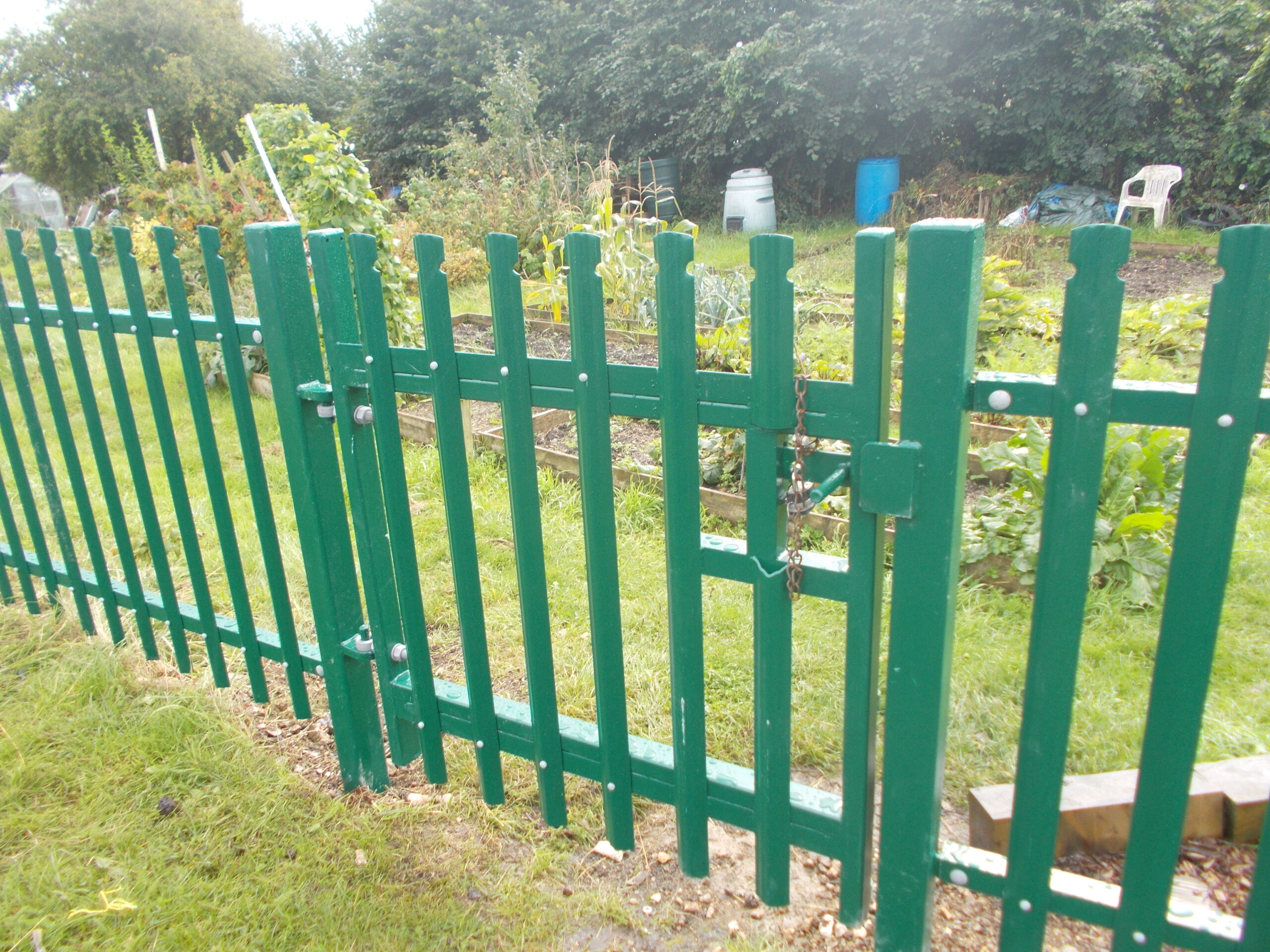
Single-leaf pedestrian gates
Heights matching the fence, widths generally around 1.0m to 1.2m, for personnel access points.
Family-run. Local install, nationwide supply.
W section and D section steel palisade, galvanised and powder coated, built to the height and specification your perimeter needs. Installed across Wigan, Greater Manchester and Lancashire. Supply only delivered UK-wide.
Send us the run length, the height and the site postcode.
By submitting this form you agree to us contacting you about your enquiry. See our Privacy Policy.
Palisade has been the standard yard and depot fence in this country for decades, and it is still there because it works.
It looks like what it is, which puts most people off before they try. It costs less per metre to install than the equivalent run of high security mesh. And when a pale gets damaged, which on a working site it will, you unbolt that one pale and put another one in. You do not replace a whole panel or wait on a specialist repair.
What it does not do is give you the fine aperture that stops a determined attacker with tools and time. If that is your threat, we will point you at 358 mesh instead and explain why. The right answer depends on what you are protecting.
What actually goes on the drawing.
| W section pales | An angled W shaped cross section that stiffens the pale at the fixing point and resists prying and impact on the attack face. The profile normally specified for genuine security work. Typically 2.0mm to 2.5mm gauge. |
|---|---|
| D section pales | A flatter, rounded back. A solid visual deterrent and a clear boundary, with generally less resistance to sustained attack than W section. Suits medium security and lower risk work. Typically 2.0mm to 3.0mm gauge. |
| Pale widths | Commonly around 51mm to 75mm depending on the range. Gauge and width both affect how the fence performs. |
| Pale tops | Triple point for maximum deterrence. Round top where the public, staff or children can get close, or where safeguarding applies. Round and notched as a middle ground. Single point for boundary definition. |
| Heights | Standard stock 1.8m, 2.0m, 2.1m, 2.4m and 3.0m. 2.4m is the most common commercial and industrial specification. 3.0m where the risk justifies it. |
| Bay spacing | BS 1722 Part 12 sets posts at 2.75m centres for both General Purpose fences up to 2.4m and Security Purpose fences at 3.0m and 3.6m. |
| Posts and rails | RSJ posts, commonly around 102x44mm, with IPE sections also used. Dug in and concreted, or bolted down onto existing hard standing. Horizontal angle rails carry the pales, two per bay on standard heights and three on taller runs. |
| Fixings | Anti-tamper shear nuts or snap-off bolts. The head shears away once torqued correctly, leaving nothing for a tool to grip. Standard nuts and bolts on a security perimeter are a false economy. |
| Finish | Hot-dip galvanised to BS EN ISO 1461, which covers welds and edges that paint cannot reach, then polyester powder coated as a duplex system. RAL 6005 dark green and RAL 9005 jet black are the two most requested, with RAL 7016 anthracite grey a common third. |
| Service life | We will not quote a flat number of years. Galvanising to BS EN ISO 1461 gives long-term protection, but the actual life depends on how corrosive your site environment is, which BS EN ISO 14713-1 exists to assess. Rural, urban, coastal and heavy industrial sites do not behave the same way. |
BS 1722 Part 12 is the British Standard for steel palisade fences. It covers manufacture and installation, sets General Purpose fences up to 2.4m and Security Purpose fences at 3.0m and 3.6m, all on 2.75m post centres, specifies minimum component sizes against a design wind loading, and requires the fence to withstand a defined push test.
LPS 1175 rates a manufactured product's resistance to tool attack. Issue 8 replaced the old SR ratings with a two-part code, a letter for the tool kit and a number for the delay in minutes. Secured by Design is the police backed scheme that accredits products meeting the Police Preferred Specification. Both attach to specific tested product ranges from the manufacturer, not to a supplier or an installer.
We are not going to tell you we hold those certifications, because we do not. What we will do is identify a certified product range if your specification calls for one, and quote you the actual system by name so you can check it yourself.
Made to match the fence: same pale profile, same top, same finish.
Heights matching the fence, widths generally around 1.0m to 1.2m, for personnel access points.
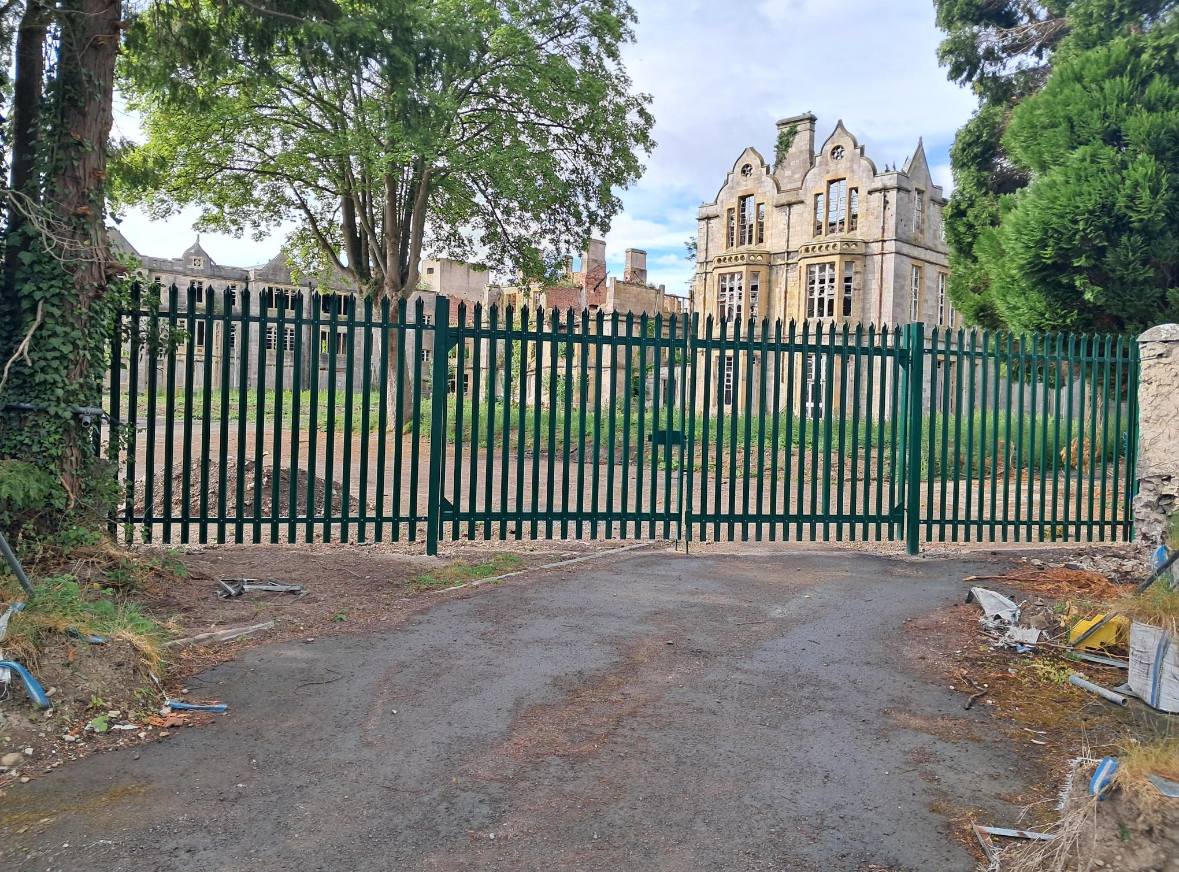
Commonly 3.0m, 4.0m, 5.0m and 6.0m total opening, with a centre drop bolt and a padlockable latch. Wider to order.
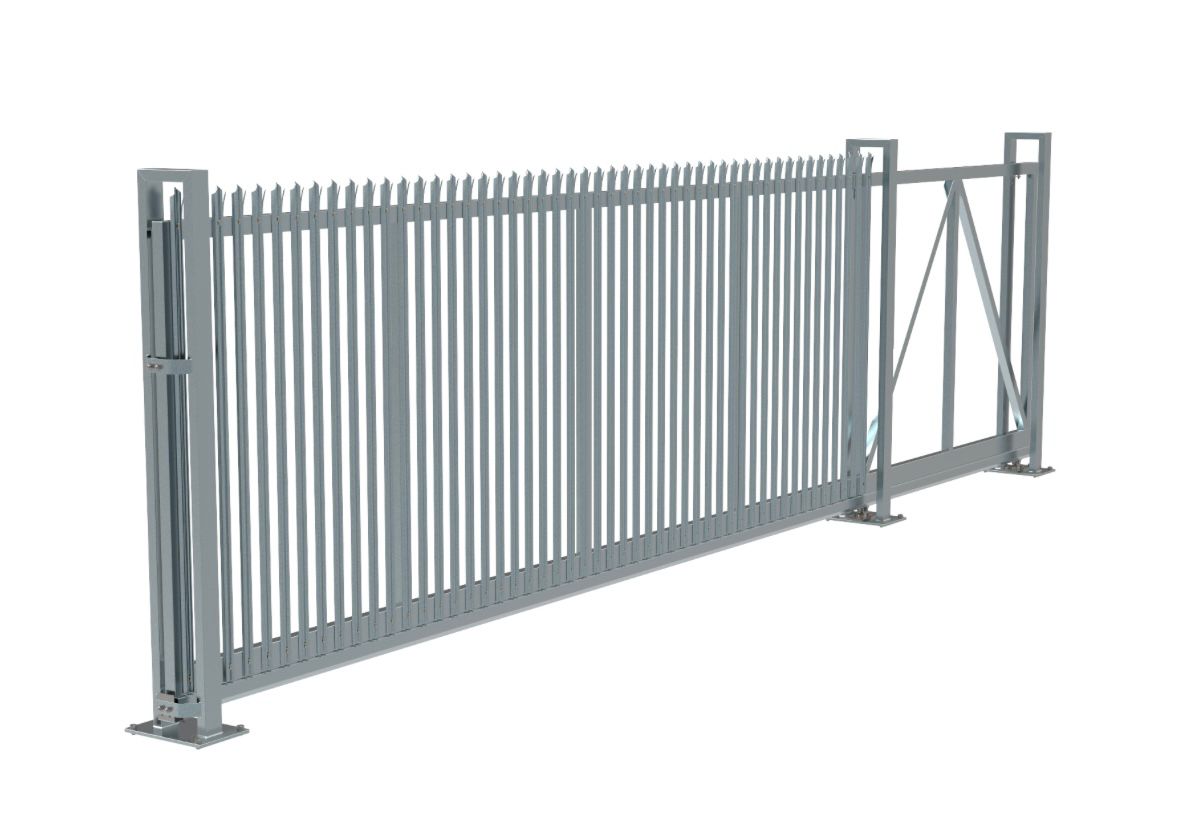
Where there is no swing clearance or vehicle traffic is heavy. Tell us at survey if automation is wanted, because it changes the posts, the foundations and the gate build. Retrofitting automation later is the expensive way round.
Including where palisade is the wrong choice.
| Install cost | Palisade is generally cheaper per metre than 358 mesh. Standard weldmesh is cheaper still, but it is lighter duty and is not a security barrier. |
|---|---|
| Security | Palisade is a strong deterrent, though pales can be levered or cut given time and tools. 358 mesh is very high, the small aperture defeats climbing and tool purchase. Weldmesh is moderate, general deterrence only. |
| Sightlines | Palisade gives partial visibility between pales. 358 is near transparent, which is better for CCTV. Weldmesh is open and transparent. |
| Repair | Palisade lets you unbolt and replace a single pale on site. Mesh systems usually mean a whole panel. |
| Appearance | Palisade is overtly industrial, deliberately so. 358 is neater and lower profile. Weldmesh is unobtrusive. |
| Short version | Palisade where a visible, low cost, easily repaired deterrent is the priority. 358 mesh where resistance to climbing and cutting matters more than cost. Weldmesh where the risk is low and appearance and budget lead. |
Survey, supply and install within roughly 20 miles of Standish: Wigan, Chorley, Buckshaw Village, Leyland, Coppull, Preston, Bolton, Skelmersdale and the surrounding parts of Greater Manchester and Lancashire.
Pales, posts, rails, fixings and gates, delivered anywhere in the UK. Give us the run length, the height, the profile and the finish and we will price the materials and the quantities. Common for contractors running their own install teams.
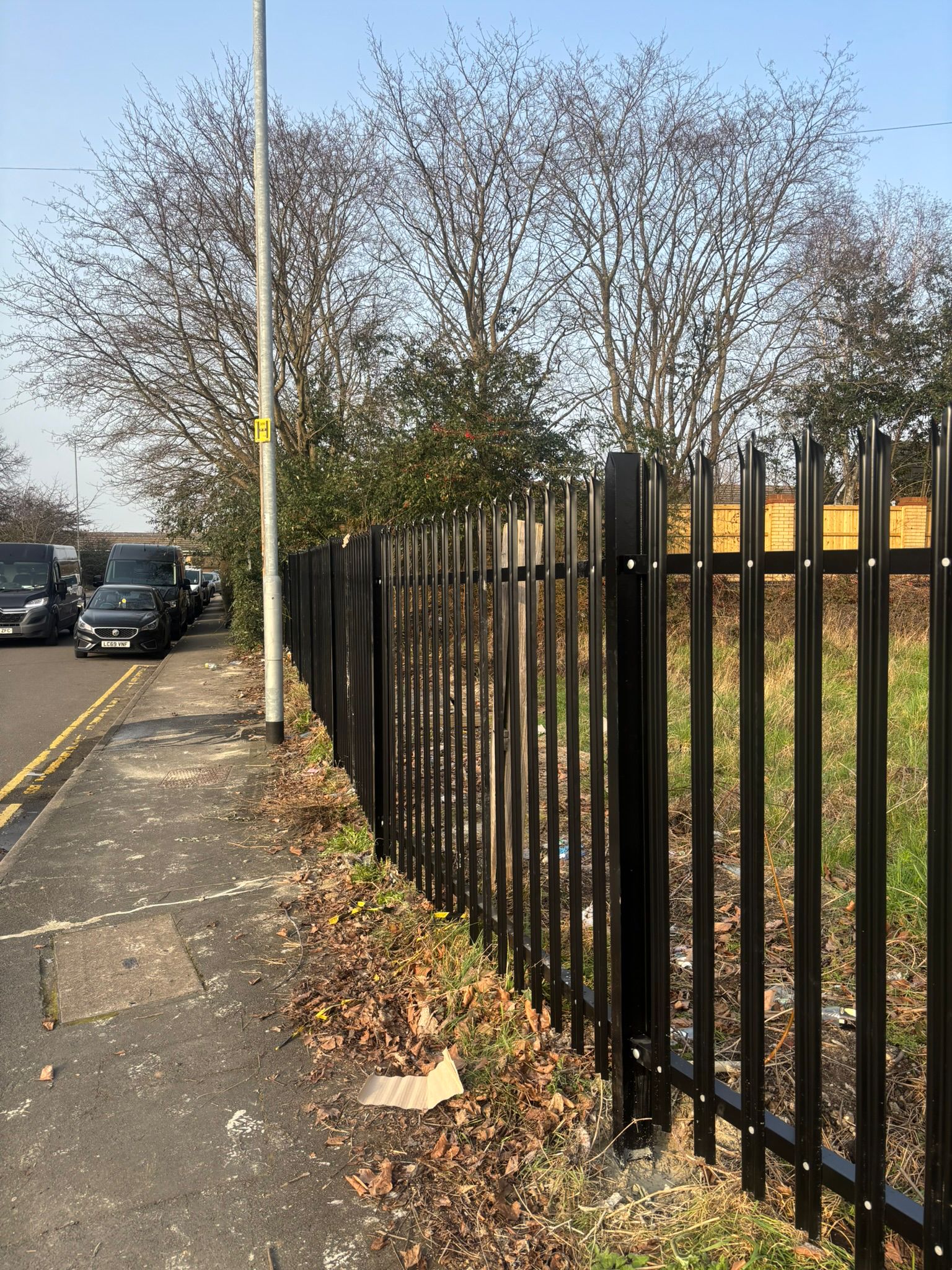
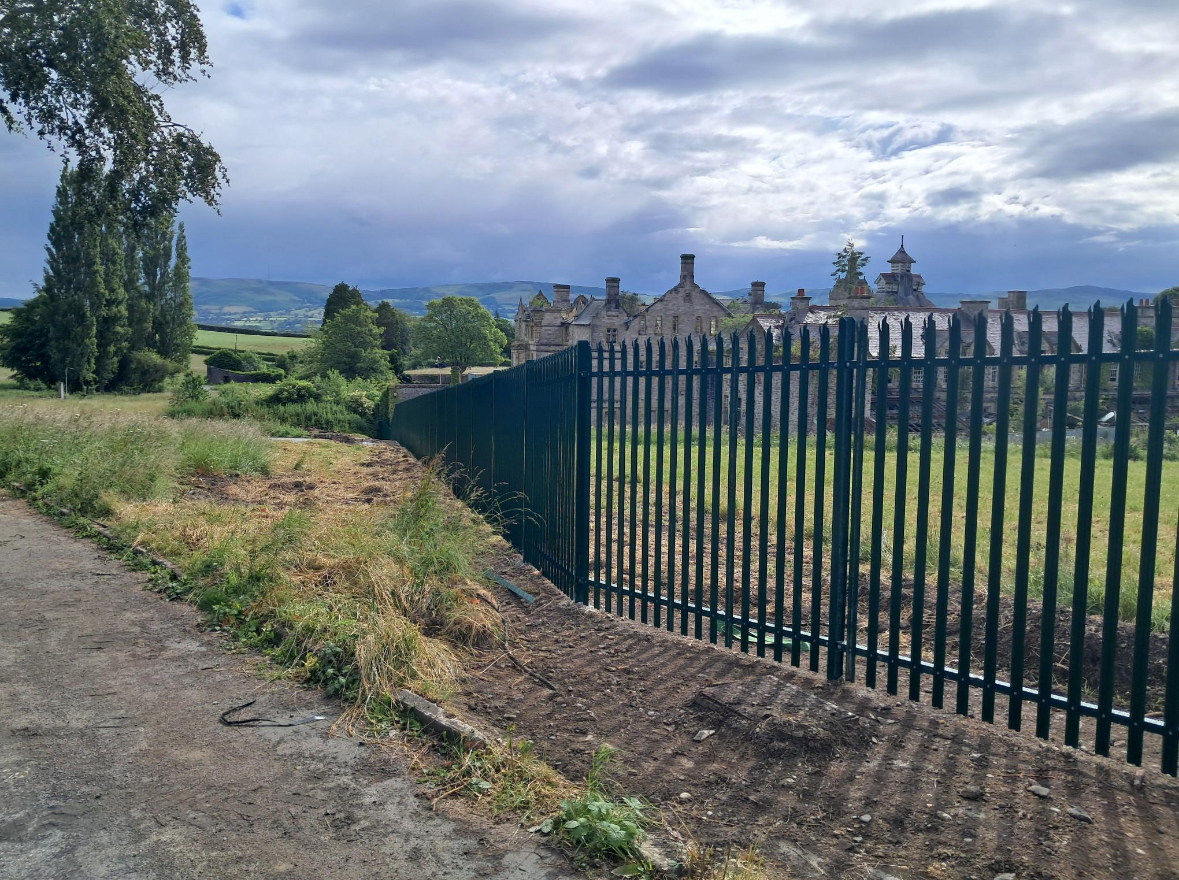
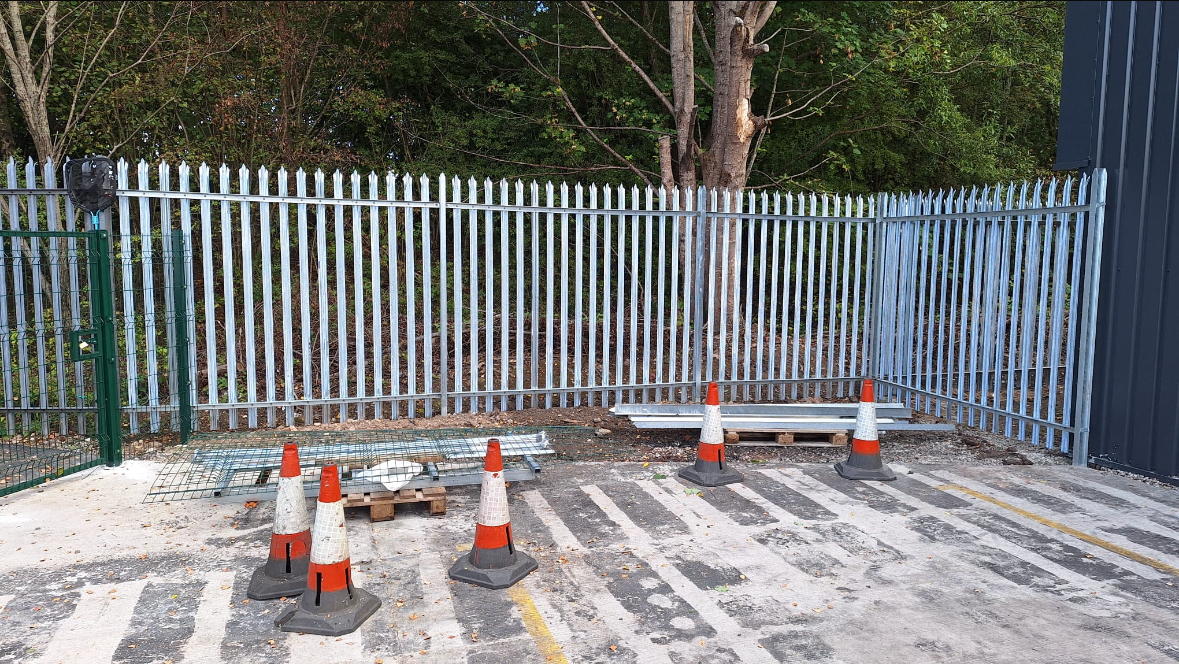
Palisade perimeters we have completed for industrial and commercial clients.
Fencing is priced by the metre, and the figure moves with the job. Four things decide it:
Tell us those and we can give you a real number rather than a guess. Site surveys are free and there is no obligation. Insurance documentation and RAMS are available on request.
Four steps from first message to a finished job.
Run length, height and the site postcode is enough to start.
We look at the ground, the access and the risk rather than guess at it.
Specification, quantities and a realistic programme, in writing, with no obligation.
We agree a date and phase the work so your site keeps running.
Professional, efficient, and the palisade fencing is seriously robust. Good value for the money.
Security fencing for our business premises turned up on time and went in perfectly. Five stars for product and service.
Rated 5 stars on Google and Facebook
Every review on this page is a real one from a customer in the North West. You can read the rest for yourself.
What industrial buyers ask before they specify a perimeter.
W section for genuine security work. The angled profile stiffens the pale at the fixing point and resists prying on the attack face. D section is flatter backed, a good visual deterrent and boundary marker, and generally less resistant to sustained attack. If the fence is protecting real value, specify W.
2.4m is the most common commercial and industrial specification. 3.0m is used where the risk justifies it, for example utility compounds and high-value sites. BS 1722 Part 12 treats up to 2.4m as General Purpose and 3.0m and above as Security Purpose.
The British Standard for steel palisade fencing. It covers manufacture and installation, minimum component sizes against a design wind loading, post spacing at 2.75m centres, and a push test the fence has to withstand.
Hot-dip galvanising to BS EN ISO 1461 gives full coverage including welds and edges. How long it lasts before it needs anything depends on how corrosive the site environment is, which BS EN ISO 14713-1 exists to assess. We will give you a realistic answer for your site rather than a single headline number.
Yes. Polyester powder coating over the galvanised base. Dark green RAL 6005 and jet black RAL 9005 are the two most requested in this sector, with anthracite grey RAL 7016 a common third. Other RAL colours to order.
Triple point is the standard high deterrent industrial top. Round top removes the points and is specified where the public, staff or children can get close to the fence line, or where safeguarding applies. It keeps the palisade form without the impalement risk.
Anti-tamper shear nuts or snap-off bolts. The head shears away once torqued correctly, so there is nothing left for a spanner to grip. Standard fixings undo the rest of the spec.
358 mesh has a far smaller aperture and much stronger resistance to climbing and cutting, which is why it is specified for utility, substation and prison grade sites. Palisade costs less to install and can be repaired one pale at a time, which suits yards and depots where visible deterrence and practical maintenance matter more than maximum attack resistance.
Yes. Single-leaf pedestrian gates and double-leaf vehicle gates in matching profile, top and finish, standard heights 1.8m to 2.4m and openings up to 6.0m as standard, wider to order. Sliding and automated options available. Tell us at survey if automation is wanted, because it changes the posts and foundations.
Yes, using bolt-down base plates where digging is not possible or where there are buried services. It is generally a compromise on security compared with a concreted post, so it is a decision we take with you at survey rather than by default.
Send us the run length, the height and the site postcode and we will come back with a specification and a written quote.
By submitting this form you agree to us contacting you about your enquiry. See our Privacy Policy.
Prefer to talk it through?
07840 349 621WhatsApp us[email protected]
Mon to Fri 8am to 6pm. Sat and Sun 9am to 2pm.